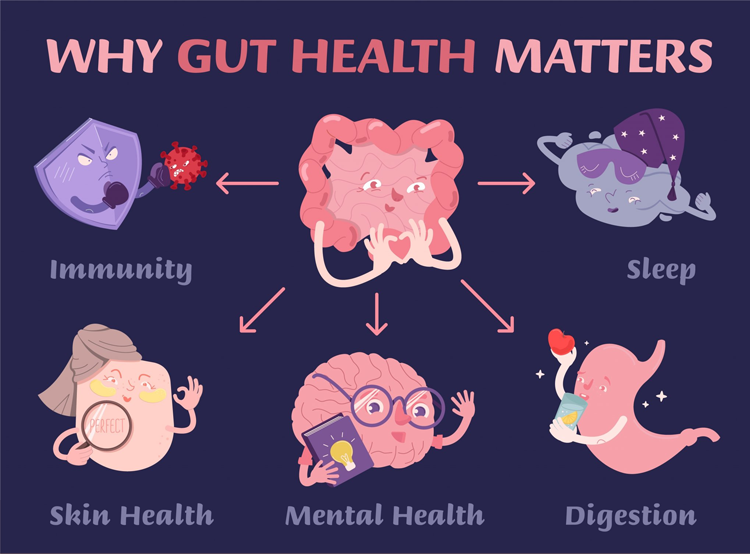
Often, imbalances in the body arise from issues within the endocrine or digestive systems. There are hundreds of hormones in the body, and when they are imbalanced, they can lead to various symptoms.
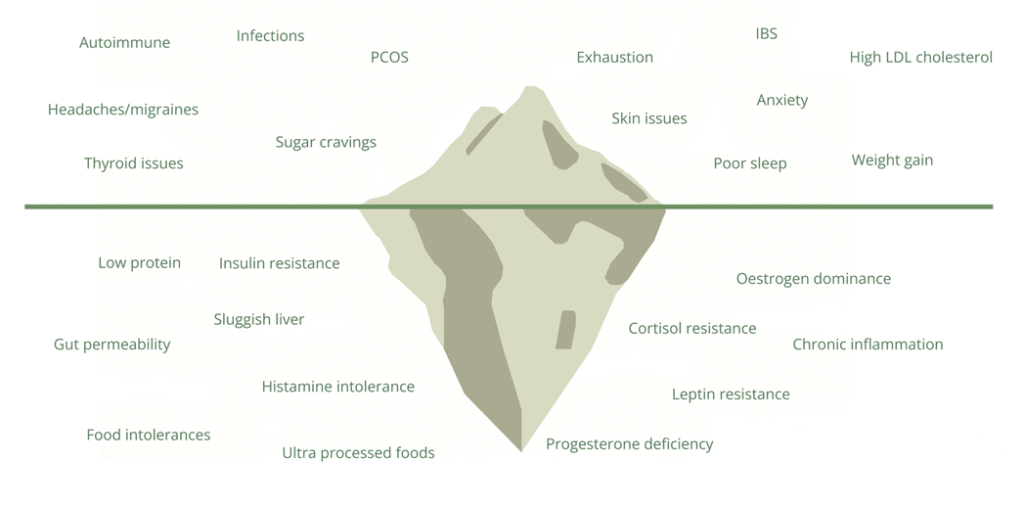
Consider health as an iceberg: the visible issues above the water represent the symptoms, while the underlying causes lie hidden below the surface. Therefore, identifying and addressing the entire “iceberg” is crucial for achieving balance and overall well-being.
How do Hormones Affect the Digestive System?
When we eat a diet that is high carbohydrate, highly processed or contains inflammatory grains, we imbalance our blood sugars.
This has a knock-on effect with digestive hormones such as motilin which is the hormone that is released in the upper small intestine. It stimulates gastric and small intestine motility, causing undigested food to move into the large intestine.
Imbalanced blood sugars create adrenaline and cortisol which can cause the oesophagus to go into spasm, increase the acid in the stomach, and reduce enzyme output from the pancreas.
With heightened stress, we see the leg muscles rotate in the legs which can misalign the pelvis. This in turn misaligns the ileo-cecal valve which causes digestive disturbance and pain.
With high insulin, high cortisol and impaired motilin and serotonin, we see an increase in stress and oestrogen and a reduction in sex hormones like progesterone.
High oestrogen and gut disturbance contribute to high histamine, increased inflammation and a heightened immune response which can show itself as allergies or food intolerances.
If the body is unable to process and balance these hormones, we stay in the blood sugar rollercoaster which adds to our desire to eat erratically.
To balance the hormone bowel storm, we start with the basics of avoiding food intolerances, balancing blood sugars and reducing stress.